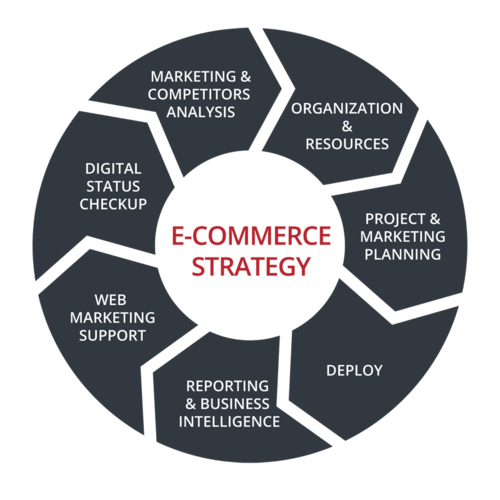
استراتيجية التجارة الإلكترونية

استراتيجية تخطيط التجارة الإلكترونية في ماجنتو من خلال التركيز على التخطيط ومنهجية المشروع الراسخة، ساعد فريقنا العملاء مثلك على التغلب على صعوبات مشروع التجارة الإلكترونية والخروج إلى الجانب الآخر إلى سماء صافية و نتائج واعدة. 

Five questions to ask before starting your Magento eCommerce project:

#1

What are the top 3-5 business goals for the eCommerce site?

#2

Do you have committed human, financial, or other resources to execute and support this project?

#3

Who will be affected by this project internally and externally?

#4

Where will relevant information come from and where is it going?

#5

After go-live, how will you evaluate success?

Magento eCommerce Project Methodology

While every Magento Commerce project is different, there are some best practices that can be used to smooth the development process.
By following a tried and true methodology that has been used across many industries, our team can help you reach the best possible
solution for your Magento Commerce project.

Define

The define phase is crucial for establishing your project vision and figuring out how to use the available technology to reach your goals.

Freestone Foodbank project example:

The define phase was crucial to the success of Freestore Foodbank’s Magento implementation. Their business goals have nothing to do with profits, making this a unique eCommerce project.

Read more about available eCommerce services → 

Design

During the design phase, the designer, business analyst, and systems architect will create the designs for the project ahead. This will ensure that the necessary technology, data mapping, and execution documents are established and referenced.

ZOLL Medical Corporation project example: 

One of ZOLL’s main concerns was making their site easier to shop. The design phase addressed those concerns, eliminating user confusion and increasing accurate orders. 

Read more about available eCommerce services → 

Develop and Deploy

In the combined develop and deploy phase, the site is created, tested, made ready for launch, and then goes live. We emphasize user acceptance testing and training for your team on your new site.  

Lapp Group project example: 

User acceptance testing (UAT) was an important aspect to Lapp’s Magento implementation and integration project. Accommodations had to be made to meet their specific product listing needs, requiring thorough testing and training before going live. 

Read more about available eCommerce services → 

Drive

The work doesn’t end when your site goes live. Now that your Magento Commerce site is live, you need to plan for the future. Briteskies can help you grow your online revenue and reach your corporate goals by:

  • Working with you to define ongoing support requirements
  • Prioritizing future business needs 
  • Developing Performance and Growth Strategy Options

Read more about available eCommerce services → 

Magento eCommerce Planning Strategy FAQs

Ecommerce strategies are interconnected plans that drive your business operations.

There are three major ecommerce strategies to consider:

  • product strategy,
  • customer relationships,
  • and corporate considerations.

Each of these must work together to ensure the best possible outcomes for your brand. Let’s explore these three major ecommerce strategies and their structure in greater detail.

Magento is a powerful eCommerce solution that will help your store succeed in the market. It is a popular eCommerce open-source platform built on the PHP programming language.
Creating an online store from scratch can be done within the Magento Free or Premium versions.

In 2007 officially the Beta version of Magento 1 was officially launched. After that Magento 1 was developed into Magento Community and Magento Enterprise. Both editions became widely known and used among developers. Its support has been officially discontinued – meaning no more security patches.

In July 2015, Magento 2 was launched. It was a great event in Magento history and for eCommerce. Nowadays, Magento 2 is getting more popular among online store owners. Just take a look at these figures – 46.16% of the world’s online stores located in the US are using Magento 2.

Being an open-source platform Magento allows thousands of developers to extend online stores functionality by adding excellent and unique features.
You can find more examples of the most useful extensions for your Magento 1 and Magento 2 here.
Find more information about Magento, its features and extensions in this blog The Ultimate Beginners Guide to Magento

This site is registered on wpml.org as a development site. Switch to a production site key to remove this banner.